What Is a Business Carbon Footprint?
A business carbon footprint is the total greenhouse gas impact created by an organization’s operations and value chain. It can include direct fuel use, purchased electricity, refrigerants, logistics, business travel, purchased goods, waste treatment, packaging, and other upstream or downstream activities.
For leadership teams, the carbon footprint is a performance signal. It helps answer:
- Where are our emissions coming from?
- Which departments, sites, or entities create the biggest impact?
- Which reduction actions should come first?
- How can we show credible progress to customers, investors, regulators, and partners?
The footprint itself is the result. The system behind it is carbon accounting.
What Is Carbon Accounting?
Carbon accounting is the process of measuring, organizing, calculating, and reporting greenhouse gas emissions. Most corporate inventories use three scopes:
- Scope 1: direct emissions from owned or controlled sources.
- Scope 2: indirect emissions from purchased electricity, steam, heat, or cooling.
- Scope 3: other value-chain emissions, including purchased goods, transport, waste, travel, and product end-of-life impacts.
The GHG Protocol treats third-party disposal and treatment of operational waste under Scope 3 Category 5. That means waste data matters. A company needs to know not only how many kilograms or tons of waste it generated, but also the waste type, treatment path, vendor, and destination.
Why Manual Carbon Reporting Breaks Down
Many companies begin carbon reporting with spreadsheets. That can work for a very small footprint, but it becomes fragile as soon as the organization has multiple sites, business units, departments, suppliers, or reporting frameworks.
RecyGlo’s Sanaterra materials identify the common pain points clearly:
- Endless hours spent manually collecting data across departments.
- Disconnected data living in silos.
- Confusion around Scope 1, 2, and 3 emissions.
- Changing global standards.
- Fear of inaccurate reporting, failed audits, or non-compliance penalties.
- Difficulty turning emissions data into strategic planning.
These are workflow problems, not just calculation problems. A better carbon accounting process should make data collection easier, make review more visible, and keep reporting evidence connected to the final number.
What RecyGlo’s Sanaterra Adds to Carbon Accounting
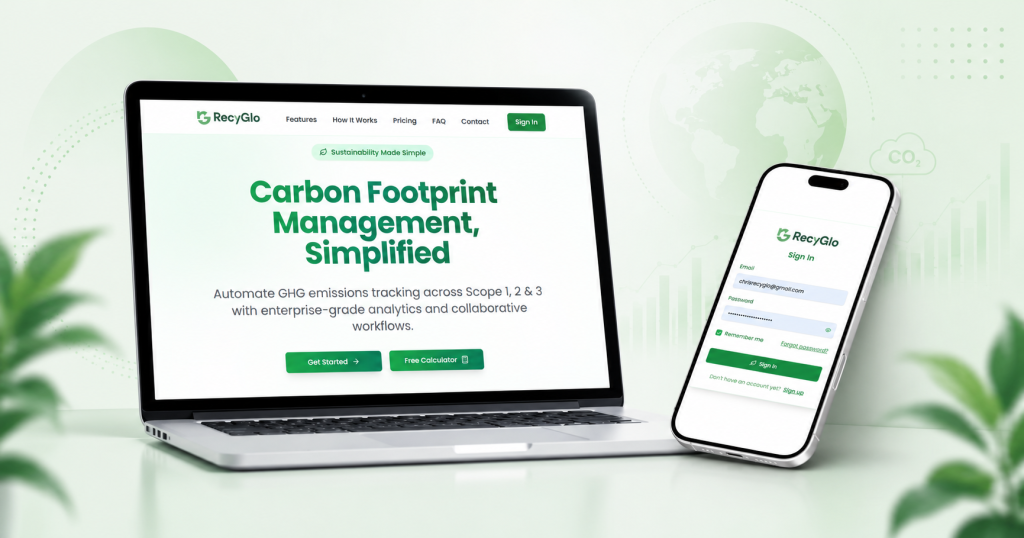
Sanaterra is positioned as an AI-powered carbon footprint platform for future-focused businesses. Its promise is simple: stop chasing carbon data and start leading with it.
- Automated Scope 1, 2, and 3 emissions tracking.
- One-click survey collection across departments and entities.
- Real-time validation checks aligned with the GHG Protocol.
- Survey tables by sender, recipient, entity, status, emission source, period, method, and emission value.
- Upload of supporting documents and files.
- Admin review and approval workflows.
- Entity pages for organizational branches or business units.
- Carbon emissions target setting, including total reduction and intensity targets.
- Report tables and downloadable report generation.
- Report designs with Scope 1, 2, 3, and total emissions visualized through bar, pie, and comparison charts.
- AI-generated insights and recommendations, with expert verification available for enterprise reports.
This turns carbon accounting into a management system rather than a once-a-year spreadsheet exercise.
How Carbon Accounting Connects to Waste Data
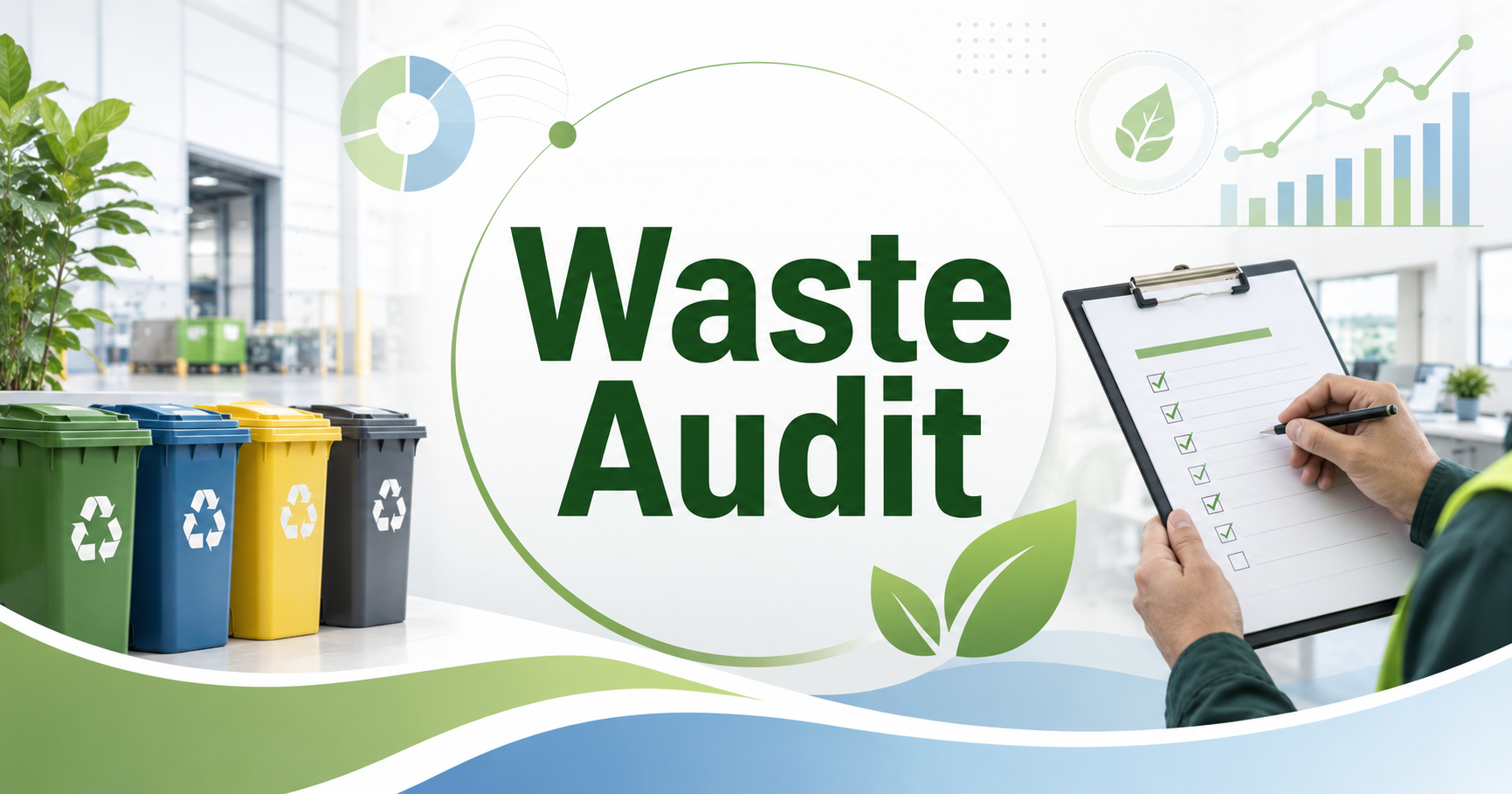
Waste is one of the clearest places where carbon accounting and operations meet. RecyGlo’s broader service materials show that the company provides B2B waste management, waste audits, waste management software, EPR and waste management reporting, recycling services, and secure e-waste destruction.
That matters because carbon accounting is stronger when waste data is digital, categorized, and traceable. RecyGlo’s waste services can help companies:
- Map waste streams by material and source.
- Track waste generation, collection, recycling, and disposal.
- Improve segregation and recycling practices.
- Identify material losses and reduction opportunities.
- Connect waste data to carbon, ESG, and EPR reporting.
RecyGlo supported around 52,488 tCO2e of carbon avoidance in 2025 and that 100% of managed waste streams were digitally tracked. These proof points reinforce the business logic: waste data can become carbon data when it is measured, verified, and connected to the right reporting workflow.
What Businesses Should Track First
Companies do not need to solve every Scope 3 category immediately. A practical first phase should focus on the data that is already material, available, or required by stakeholders.
Start with:
- Fuel and energy use by site or entity.
- Electricity bills and meter data.
- Refrigerants and direct emissions sources where relevant.
- Waste by material, weight, vendor, and treatment path.
- Transport and logistics activity.
- Purchased materials and packaging data where material.
- Emission factors, assumptions, and reporting boundaries.
- Supporting documents for review and audit readiness.
Sanaterra’s survey model is useful because it distributes data collection to the right people while keeping the carbon team in control of review and reporting.
How RecyGlo Supports the Full Carbon Workflow
RecyGlo’s service materials show a broad sustainability stack: waste management, waste auditing, sustainability training, digital sustainability platforms, certification and compliance support, secure e-waste destruction, ESG software, waste management software, carbon footprint calculator, and reporting, certification, accreditation, and compliance support.
For carbon accounting, that means RecyGlo can support both the data layer and the reporting layer:
- Waste audits establish reliable baselines.
- Waste management services generate operational activity data.
- Sanaterra calculates and reports Scope 1, 2, and 3 emissions.
- ESG software turns carbon and sustainability data into stakeholder-ready reporting.
- Training helps teams understand their roles in data collection and reduction.
- Compliance support helps align outputs with standards and regulatory expectations.
FAQ
What is the difference between a carbon footprint and carbon accounting?
A carbon footprint is the emissions result. Carbon accounting is the process used to collect data, calculate emissions, document assumptions, track targets, and generate reports.
Does carbon accounting include waste?
Yes. Waste generated in operations can fall under Scope 3 Category 5 when handled by third parties. Businesses should track waste type, weight, vendor, destination, and treatment path.
What is Sanaterra?
Sanaterra is RecyGlo’s AI-powered carbon footprint platform. It supports automated Scope 1, 2, and 3 emissions tracking, one-click surveys, real-time validation, target setting, downloadable reports, and AI-generated insights.
How does RecyGlo help businesses reduce carbon reporting risk?
RecyGlo helps businesses collect better operational data, digitize carbon and waste workflows, review supporting documents, generate audit-ready reports, and connect carbon accounting with ESG and compliance reporting.